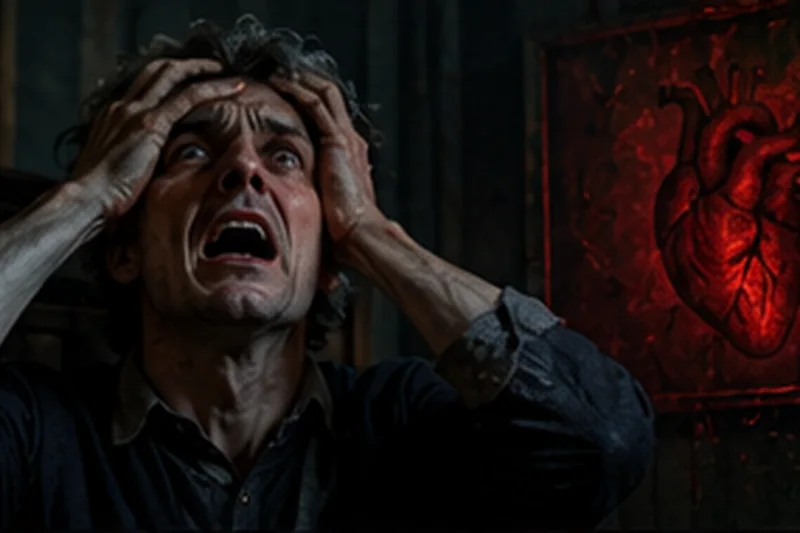
Page 1The Glass Eye
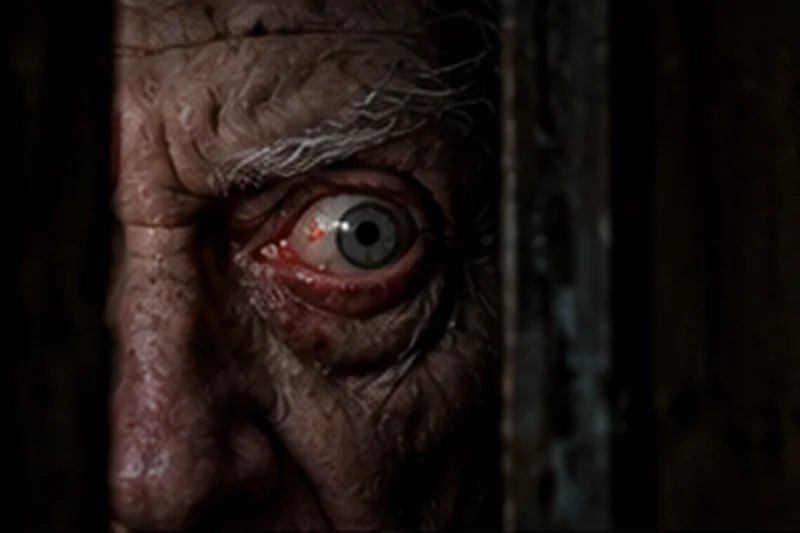
Lucien had never feared old Auguste. He made his tea, sorted his letters, and patiently endured his long stories. Only one thing disturbed him: the old man’s left eye, blue and almost white, veiled by a film that seemed to reflect a room different from the one they occupied. Some evenings, Lucien could make out a door behind his own reflection. There was no door in that wall.
Auguste owned a strange watch with no hands, kept inside a small case. “It does not measure time,” he said. “It measures what we have left.” Whenever he opened it, Lucien heard a muffled beat. After the sudden death of the notary who had come to amend the will, that beating continued all night behind the partition. Lucien convinced himself that the eye and the watch were connected. He decided to watch Auguste sleep.
For seven nights he eased the door open at midnight. For seven nights the eye remained closed. Yet every morning a fresh scratch appeared on the floorboards between the bed and the wall, as though something enormously heavy had been dragged through the darkness. The seventh mark almost formed an arrow pointing toward Lucien’s room.
Page 2The Room Next Door
The next day, Auguste calmly asked Lucien why he came to watch him sleep. Lucien denied it. The old man did not grow angry. He merely set the handless watch on the table. Something pulsed beneath the glass. “Some houses learn their inhabitants,” he whispered. His pale eye turned toward the partition. Three knocks answered from the other side.
Lucien searched the house. Inside a writing desk he found five portraits of former servants. All were his age. All bore his first name in different handwriting: Lucien, 1812; Lucien, 1836; Lucien, 1860… On the back of the last portrait was a sentence: When the eye opens, do not let the heart choose its room. He tried to leave, but the front door now opened onto the upstairs corridor.
That night the beating came from his own bedroom. Slow. Patient. Each pulse made his candle flame shiver. Pressing his ear to the wall, Lucien heard breathing as well. Then his own voice, very faint, spoke from behind the plaster: “Eighth night.”
Page 3The Eighth Beat
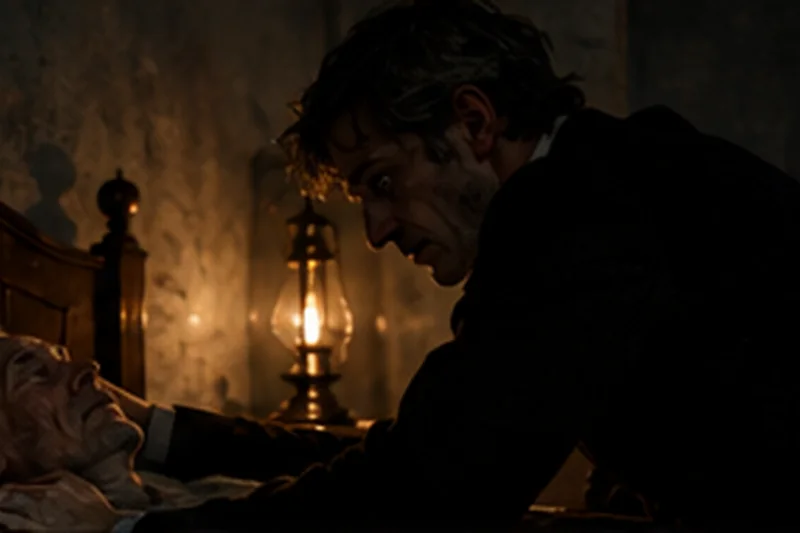
At midnight Lucien entered Auguste’s room carrying the lantern. A false move snapped the clasp. The old man sat up. His eye opened, enormous in the thin blade of light. Then the beating erupted-not from Auguste’s chest, but everywhere: floorboards, ceiling, pipes, furniture. The whole house had a pulse.
Auguste begged Lucien not to look into the eye. Too late. In its milky surface Lucien saw the five servants from the portraits kneeling beneath the floor. None of them was dead: their mouths moved, their hands held up the boards as if keeping something from rising. Behind them stood a sixth man. Lucien recognized his own face, aged by decades.
Panicking, he knocked Auguste down and smothered his cry beneath the mattress. When the body stopped moving, the beating ceased. Lucien almost smiled. Then a single knock sounded inside the wall. The handless watch sprang open by itself. Inside, one tiny hand had appeared.
Page 4The House Is Listening
Lucien hid the body beneath three floorboards. At four in the morning three police officers arrived: a neighbor had heard a cry. Lucien welcomed them with feverish confidence, showed them through the house, and placed their chairs directly above the hiding place. For several minutes, nothing happened.
Then the beating returned. Faint at first, like a watch wrapped in cotton. Lucien spoke louder. The officers did not react. The sound swelled. The walls contracted almost imperceptibly. Window glass trembled. On the wallpaper, red flowers seemed to open and close with every pulse. Lucien realized in horror that the officers heard nothing because the beating no longer came from the corpse.
A dark vein ran beneath the wallpaper and branched toward their feet. Lucien tore away a strip: the wall underneath was warm and damp, threaded with red fibers. The house had built something around them. One officer asked why his nose was bleeding. Lucien heard Auguste laughing beneath the floor.
Page 5What Still Beats
He screamed for them to tear up the boards. The officers obeyed and found the body. But beneath it there were no joists and no earth: a staircase descended into reddish darkness. Portraits of the five Luciens hung along the walls. Far below, dozens of handless watches beat together.
Auguste’s dead eye opened. Lucien understood: the old man had not been the heart of the house, but its keeper. In every generation, a man with the same first name was drawn here, convinced that murder would set him free. The killing merely passed on the watch. The officers stepped back; already they seemed to be forgetting what they saw.
By morning the report described the natural death of an old man and a distraught servant. Lucien remained in the house. Years later, a young man answered an advertisement. His name was Auguste. Lucien served him tea. His own left eye, now blue and milky, settled unwillingly on the newcomer.
Behind the wall, something beat twice-like a heart recognizing its next keeper.