Page 1The Tapestry Room
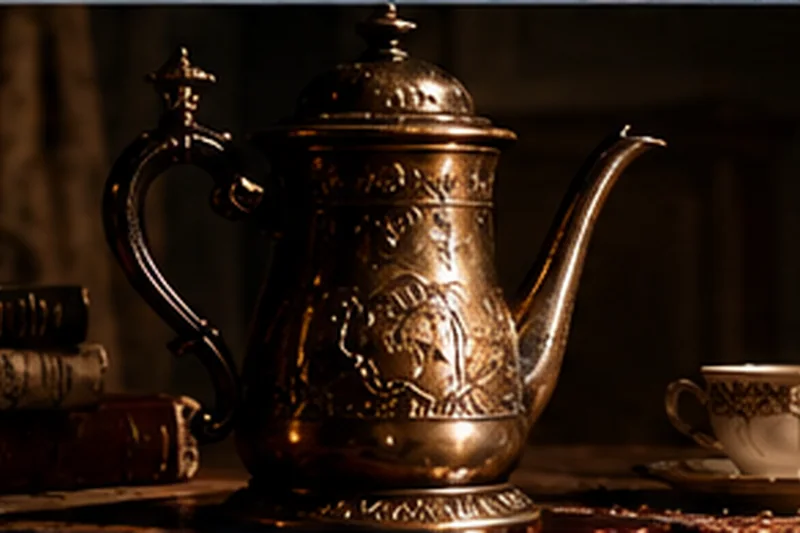
Émile, a young illustrator, spent the winter with a friend in Normandy whose family owned a house crowded with antique furniture. He was given a room hung with mythological tapestries. On the mantel stood a porcelain coffee pot painted as a young woman in a blue dress. Her smile was so precise that Émile looked away.
Before sleeping, he noticed that the figures in the tapestry shifted slightly whenever he looked elsewhere. The hunter raised his gun. A nymph turned her head. In the portrait above the bed, an old man moved his hand a little closer each time to a tiny key painted on his chest.
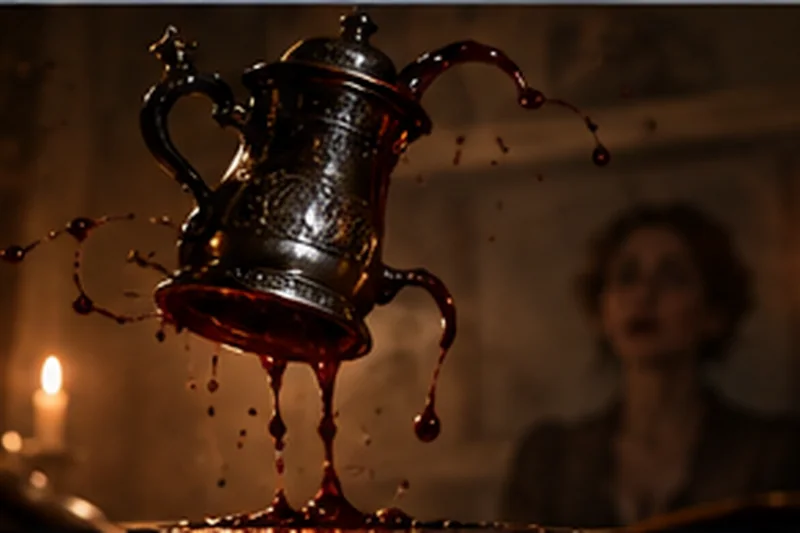
At midnight the clock struck thirteen. The coffee pot rose, poured black coffee into twelve cups, and the armchairs moved around the table. The portraits stepped down from their frames with the dignity of guests arriving late.
Page 2Midnight Strikes Thirteen
Émile remained motionless beneath the covers. The figures did not seem to see him. They drank, laughed, and exchanged news a century out of date. A lady with no reflection announced that “the thirteenth place” was finally occupied. Everyone turned toward the bed.
The room stretched. The walls receded and became a ballroom lit by hundreds of candles. The coffee pot grew until it took human form: a young woman in blue, identical to the figurine. She called herself Angela and held out her hand. At the touch of her fingers, Émile felt a tiny heart beating as quickly as a spoon against porcelain.
They danced. Each turn of the waltz erased one detail of the real world: the wind beyond the windows, the door, his coat, then even the memory of the house. Émile realized he might forget morning itself. He asked Angela why she was keeping him there. “Because you drew me before you met me,” she replied.
Page 3The Ball of Objects
In his sketchbook, lying at the edge of the ballroom, Émile found dozens of drawings of Angela that he did not remember making. Some showed her growing old, others dead, others trapped inside the coffee pot. One drawing showed Émile himself seated inside an empty frame.
Angela told him that a jealous ancestor had hired an occult painter to preserve forever the house’s last happy evening. The spell had worked too well: every object retained a fragment of the guests, condemning the celebration to repeat. Angela, who died before dawn, had remained imprisoned in the object she was holding when she fell.
To break the loop, someone living had to drink from the thirteenth cup and choose one memory to surrender. Émile agreed. The coffee tasted of ashes and childhood. At once the candles leaned toward him, and his shadow detached itself from his feet to join the dancers.
Page 4Angela Remembers
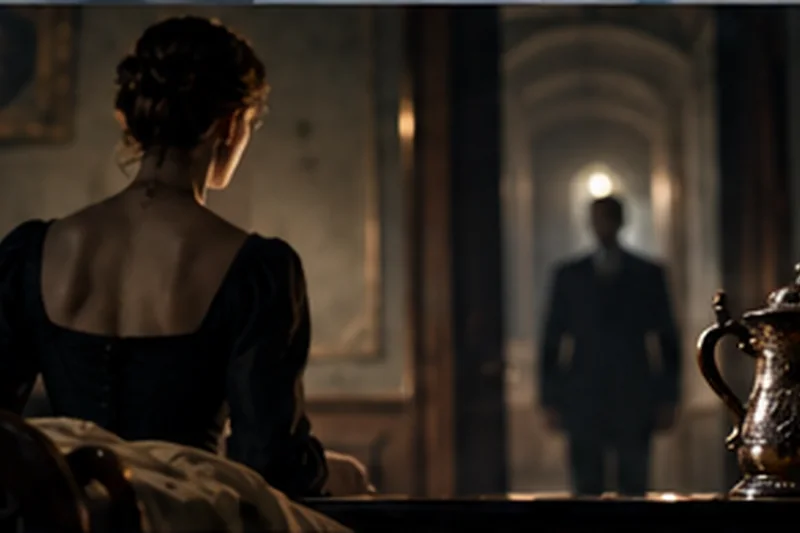
Without his shadow, Émile became almost transparent. Angela led him behind the tapestries into a corridor made of painted scenes. They crossed summers, funerals, frozen meals. At the far end waited the occult painter, still alive inside his self-portrait. He demanded the promised memory-not some trivial detail, but the person Émile loved most.
Émile refused. Furniture began to float, frames slammed, candles cast enormous shadows. Angela seized the thirteenth cup and drank in his place. Recognition slowly emptied from her face. She forgot the house, the ball, then Émile. The spell cracked like glass.
Émile caught her as the room collapsed into painted dust. He whispered her name again and again. At the final instant, Angela smiled without knowing why. Then everything went dark.
Page 5The Last Cup
Émile woke on the floor at daybreak. The coffee pot was shattered. Among the pieces he found a tiny porcelain key. His friend told him that a young woman named Angela had once lived there and died during a ball, but no portrait of her had survived.
Back in Paris, Émile tried to draw what he had seen. He could not remember Angela’s face. Yet his hand drew it by itself, night after night. The finished picture showed a woman in blue seated at a table with two cups of coffee. In the opposite chair, someone had been sketched and then erased.
Émile placed the tiny key on the paper. A door appeared in the drawing. He opened it with the tip of his fingernail. The smell of hot coffee filled the studio. On the other side, Angela looked up and said, “You’re late.” Since then, every night when midnight strikes thirteen, a light comes on inside Émile’s locked studio.
In the morning, two cups are still warm-and a new silhouette has been painted on the wall.