Part 1The Plywood
My dad told us the noises in the attic were rats, and he kept telling us that for about six years.
He died in February. My mother had passed away seven years before him, so my sister Megan and I cleaned out the house to get it ready for sale. We only found the room because of a water stain on the ceiling of my old bedroom. The roofer went up into the attic to take a look, and about ten minutes later he came back down and asked if we knew that someone had put plywood behind the insulation.
We knew nothing about any plywood.
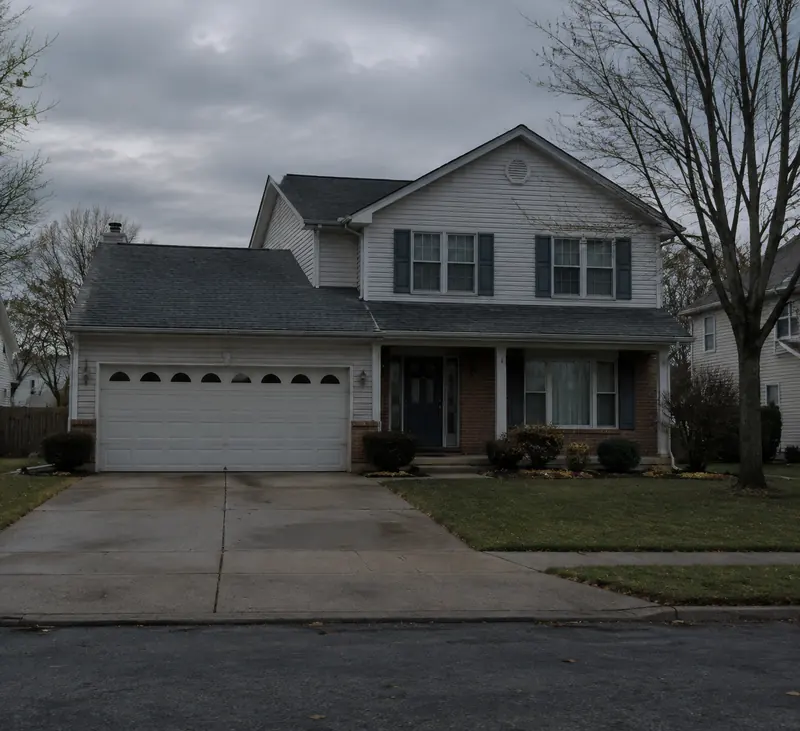
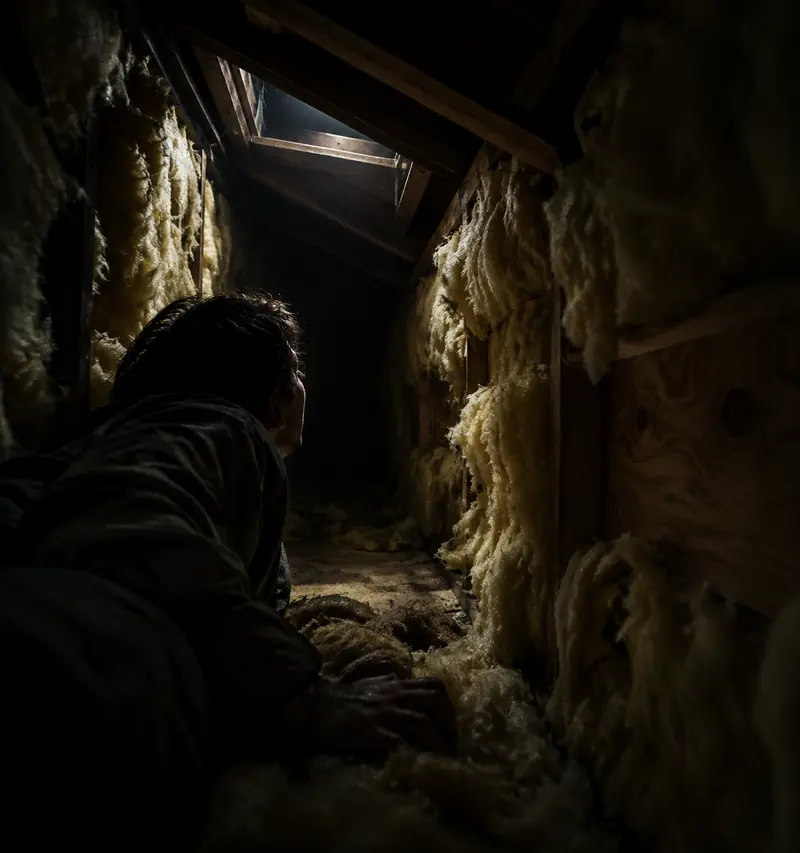
The attic is pretty low; you have to stoop between the rafters to get around. Dad kept the Christmas decorations near the hatch, and when we were kids we weren’t allowed to go any farther, because he was convinced one of us would put a foot through the ceiling.
Behind the plywood there was a space about six feet long and three feet wide. Inside we found a floor mattress, a pile of food wrappers, a plastic cup, two pencils worn down almost to the wood, one of our old water jugs, and the portable toilet Dad had bought when Megan was little because she refused to use the campground bathrooms after dark. There were also thirty-seven drawings.
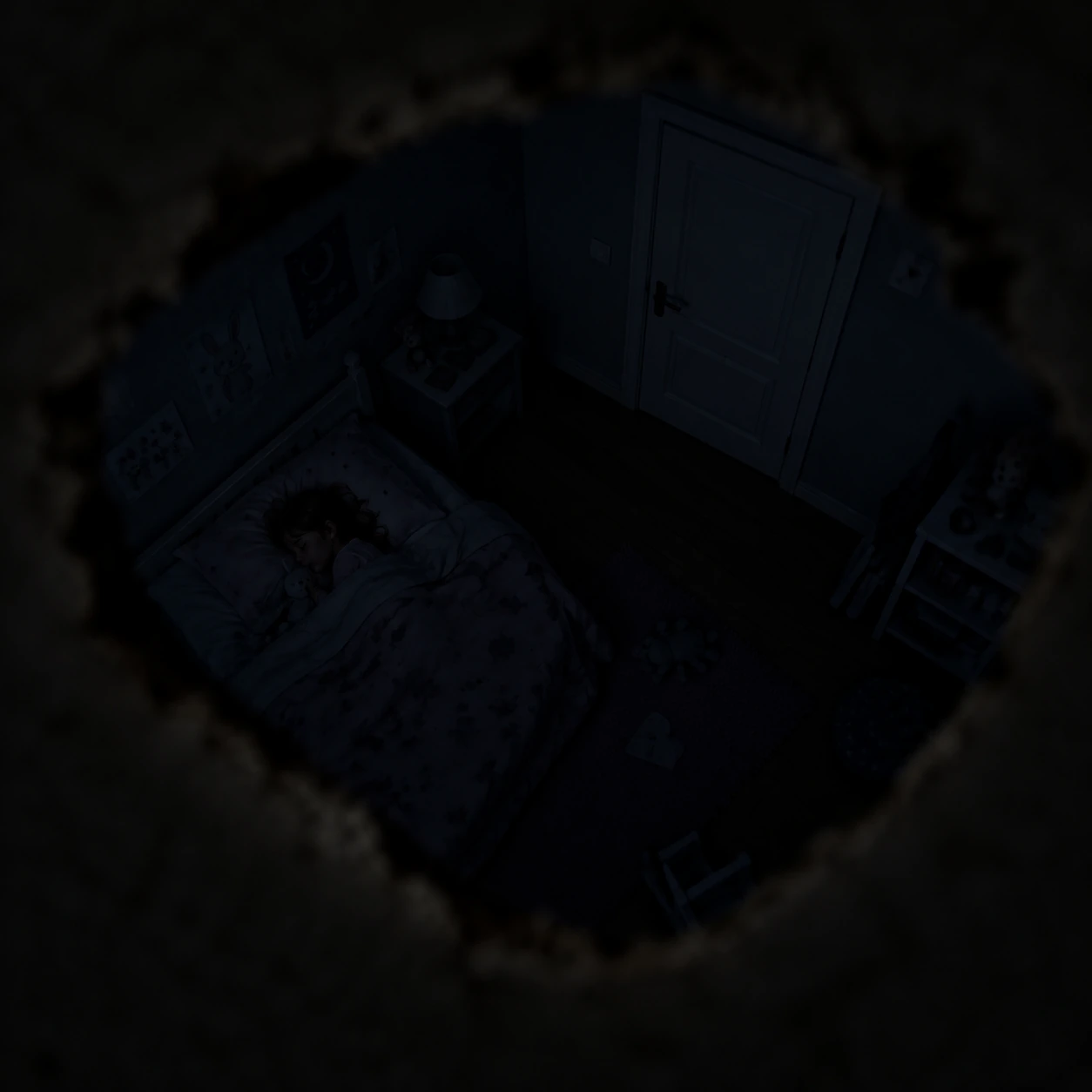
The first one I picked up was drawn on the back of an electric bill. It was my parents’ bedroom, seen from above. Mom was asleep on her side and Dad was on his back. I recognized the headboard right away because Dad had built it himself, with three square panels at the top, and whoever made the drawing had taken the trouble to render all three correctly.
Dad’s eyes were open.
Part 2The Granola Bars
The drawings were not all of equal quality. Some of the early ones were sloppy, with crooked beds and hands that were essentially big blobs, and it was obvious that whoever made them was much better at furniture than at people. The later drawings were different. The lines grew lighter and surer, and the faces began to look like real faces. Dad improved the fastest. I know that sounds strange, but it’s true. In the later drawings, I could recognize him before I even figured out which room he was in. Whoever made the drawings had learned the crease between his eyebrows, the way his hair was flattened on one side after he’d been lying down, even the shape of his hands. The rest of us mostly stayed simpler.
The first thing that came back to me was the granola bars. Mom bought them for our school lunches, and two or three at a time would disappear. She blamed me, I blamed Megan, and Megan blamed me right back. Dad said it was rats. Then the bread started disappearing, the cookies, and once, half a roast chicken. That last one really turned into a fight, because Mom was sure Dad had eaten it after everyone went to bed and Dad swore he hadn’t. She told him that if we had rats big enough to carry off half a chicken, he needed to do something about it.
That weekend, Dad bought insulation. I remember he spent most of that Saturday in the attic. The noises stopped for a few days, then came back.
What I remember is more creaking than scratching, something moving above my room and then farther along the ceiling. Sometimes I heard it above Megan’s room too. Dad always said it was rats.
Part 3Three Knocks
When I was ten, I tried talking to them. It was a hot night (we didn’t have air conditioning upstairs back then) and the box fan next to my bed clicked every time it came on. Something creaked above my head. I had a plastic baseball bat next to my bed, so I turned it over and knocked the handle against the ceiling three times.
After a few seconds, something knocked back three times.
I thought it was the coolest thing that had ever happened to me. I knocked twice, but before anything could answer, Dad came into my room and took the bat from me.
“Don’t do that.”
He wasn’t whispering. He was just much calmer than usual when he caught me doing something stupid. I asked him why, and he said, “Because I told you it’s rats.”
The next morning he went up into the attic, and soon after there was a metal slide bolt on the hatch. I asked him what it was for.
“Rats.”
I told him rats couldn’t open the attic hatch, and he said, “Exactly.”
Part 4The Case Number
Megan came up while I was looking at the drawings, and she went through about three of them before heading back down. When I followed her into the kitchen, she said we had to call someone.
“Who?”
“The police?”
“And tell them what?”
She just stared at me. “Someone was living above our bedrooms.”
She was right. She called the non-emergency line while I called the roofer back. Two officers came and photographed the hidden space, and the roofer pulled out more insulation and found a flattened path running along the rafters above the bedrooms. Above mine there were two small holes in the drywall. There were more above Mom and Dad’s room, and one above Megan’s. From below, they disappeared into the ceiling texture.
I had slept under two of them for twelve years.
The roofer inspected the rest of the roof space and found no other way in. Nothing in the garage, no usable opening under the eaves, no duct big enough for a person. Whoever used the attic came and went through the hatch.
When he came back down, I asked him how much I owed him, and Megan said, “Seriously?” But it was the first thing I asked.
The police gave us a case number, told us not to throw anything away, and left. Megan and I sat down on the floor upstairs with the drawings spread out between us.
One of them showed me asleep with a cast on my left wrist. I broke that wrist when I was eleven, two days before summer vacation, which meant the lock was already on the hatch by then. Whoever made the drawings was still up there after it went on.
Dad was in eleven of the pictures, and he was awake in every one of them. In one, he was sitting next to my bed. I remember that night. I was sick and kept waking up, so he stayed in my room with me for a few hours. In the drawing, I’m asleep, and Dad isn’t looking at me. He’s looking at the ceiling.
Dad wasn’t easy to approach, but you could always count on him. When the water heater exploded in my first apartment, I called him before I called a plumber, and he showed up with towels and a toolbox and didn’t ask how I’d managed to do that until the floor was dry. That was how he handled things. He fixed the part of the problem he could reach. Getting him to explain anything was much harder.
Part 5The Closed Doors
Megan remembered something else: Dad used to close our bedroom doors every night. After we’d gone to bed, he would walk the upstairs hallway and shut them if we’d left them open. He said it kept the heat in. He did it in summer too, and none of us had thought about it in years.
We went back through the drawings. In every picture drawn from above one of our bedrooms, the door was closed.
Then Megan found the one of Dad in the attic. He’s crouched near the hatch holding a plate with something rectangular on it, probably a sandwich, and he’s looking toward whoever is drawing him.
Megan said, “No,” and then again, louder: “No.”
Until that moment, I had forgotten that Dad sometimes took food upstairs after dinner. It wasn’t every night, maybe once or twice a week as far as I knew. If Mom asked, he said he was putting out bait. I don’t remember any traps, or dead rats, or exterminators ever coming to the house. What I remember is the plates coming back downstairs. Sometimes.
Megan picked up the water jug. “Wasn’t this ours?”
Dad used to write our last name on all of our camping gear because he was convinced people stole things at campgrounds. Most of the marker had worn away, but you could still make out some of it. And the toilet was definitely ours. For about a minute, that felt strangely comforting, in a way I really can’t explain, as if at least Dad hadn’t just left someone up there with nothing. Then I started thinking about what using either of those things actually meant. The jug had to be filled. The toilet had to be emptied. And once or twice a week is not enough food for a person to live on.
Megan figured it out at about the same time I did. She leaned back against the wall and said, “So he opened it.” I didn’t say anything. “Of course he opened it.”
Maybe whoever was up there stayed in the attic almost all the time and Dad brought them everything they needed. Maybe once or twice a week was actually much more often than that, and I just hadn’t noticed. Or maybe the hatch wasn’t usually locked at all. The lock only went on after I knocked on the ceiling, and that was the first time that occurred to me.
Megan got angry when I said that out loud, though it was less real anger than her need for me to stop. She said maybe it was family. Maybe Dad thought calling the police would only make things worse. Maybe it was exactly the kind of stupid thing he’d decide he could handle on his own. That last part sounded like Dad. It didn’t make me feel any better.
Part 6November 2005
I took the drawings home and started sorting them by date, which is something I should have done at the house. Many of them were drawn on junk mail and scrap paper, but eleven were on something with a date on it: bills, permits, the back of a letter from the county. Others I could place roughly by what was in our rooms at the time. The first dated drawing was from March 1999, and the last from November 2005, when I was fifteen.
That bothered me, because that’s about when Dad stopped talking about rats. It wasn’t dramatic. The noises just stopped being a family matter. Megan remembered that he took the lock off the hatch when he repainted the upstairs hallway, and she thought it was around Christmas 2005. I remember the repainting, but I don’t remember the lock being taken off.
I called Megan and asked her where she thought the person had gone. She was silent for so long I thought the call had dropped, then she said, “How would I know?”
We went through every member of our family, and no one fit. No one disappeared in 2005, no one suddenly reappeared, and there was no uncle we weren’t supposed to talk about. I also went through all the paperwork Dad had left behind, the bills, the tax papers, the receipts, and the manuals for appliances we hadn’t owned in twenty years. There wasn’t a single name I didn’t recognize.
Once the drawings were in order, one thing became much clearer. Whoever made them had stopped drawing Megan first. There are no drawings of her after she moved into the downstairs bedroom, when she was fourteen. There are still pictures of me, Mom, and Dad.
The last six drawings are mostly of Dad, and he isn’t asleep in any of them. In one, he’s lying on the bed with his eyes open. In another, he’s sitting at the kitchen table very early in the morning. I know it’s early because of the time on the microwave clock. That one couldn’t have been drawn through a hole in the ceiling, and I have no idea how I could have missed that at the house. Another shows Dad at the bottom of the stairs, drawn from somewhere above him, and he’s looking up.
That was when I stopped thinking of the hidden space as the place where whoever it was had lived the whole time. It could have been where they slept. That’s not the same thing.
The last dated drawing is on the back of an electric bill from November 2005. Dad is standing under the attic hatch with one arm raised. You can’t see his face because he’s looking up, and the hatch is open.
I stared at it for a long time. Then I turned over the drawing of me with the broken wrist. I had never checked the back, because there was writing on it from school and I had assumed that was all there was.
There was another drawing under the writing. Same pencil, same cast, same room, but it isn’t drawn from the ceiling. The angle is low, right next to my bed, as if whoever made it was crouching in the narrow gap between the bed and the wall. I’m sleeping with the cast resting on the blanket. The bedroom door is wide open, and Dad is just outside. He isn’t blocking the entrance. He’s standing to the side with one hand on the doorknob, and his other hand is raised to his mouth, one finger pressed against his lips.
I didn’t show that one to Megan.
After I found it, I went back through all thirty-seven drawings, one by one. Every drawing of one of us asleep has the bedroom door closed, except that one.
The attic hatch only locked from our side.