Part 1The Boy with the Bike
I don’t really know who I’m writing this for. Maybe I’m putting it here simply because if I keep it locked behind my ribs any longer, it’s going to eat me alive from the inside.
When you spend your whole life convinced the world is a puzzle waiting to be solved, nobody warns you what happens when you finally put all the pieces together and discover that the picture is something you can’t live with, and something nobody will ever let you fix.
When I was seven years old, a boy who lived two streets over lost his red Schwinn bike. The parents in the neighborhood figured some teenagers from the next town had thrown it in the river, but I couldn’t let it go. I spent three entire days walking the ditches behind our subdivision, poking through the reeds with a peeled birch branch, until the wood clinked against submerged metal. I dragged that bike out of four feet of stagnant water, my hands covered in duckweed and mud, and I wheeled it up onto his porch.
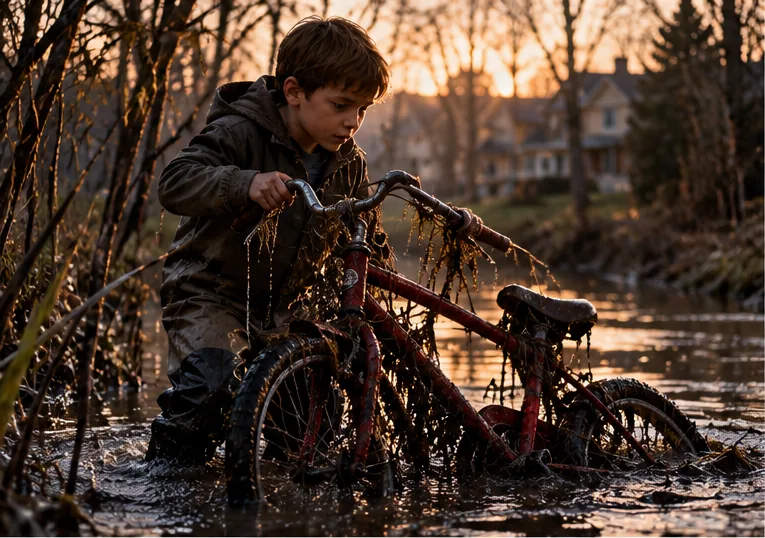
I still remember the look on his face. But more than that, I remember the sudden, electric certainty that settled in my chest. To my seven-year-old brain, the universe was simple: bad things happened when people looked away, but if you were patient enough, stubborn enough, and brave enough to wade into the cold water, you could bring the missing things back into the light. You could put everything back in order.
I carried that romantic childhood vision for thirty years. I built my whole life around it. I studied criminal psychology, forensic pathology, fiber analysis, and blood spatter mechanics. I learned how people lie with their eyelids, how skin tears on gravel, and how long it takes a human heart to stop beating in freezing temperatures. I believed, with the arrogant innocence of an unbroken man, that every cruelty carried an objective answer, and that truth was an antidote.
Then my wife, Maeve, got sick.
Part 2Maeve
It wasn’t a crime. It wasn’t a puzzle I could solve with a flashlight and a notepad. It was small-cell carcinoma, and it tore through her body with the silent, indifferent savagery of a forest fire. In four months, it ate the woman who sang off-key while baking sourdough and reduced her to eighty-two pounds of translucent, bruised skin shivering under a hospital sheet.
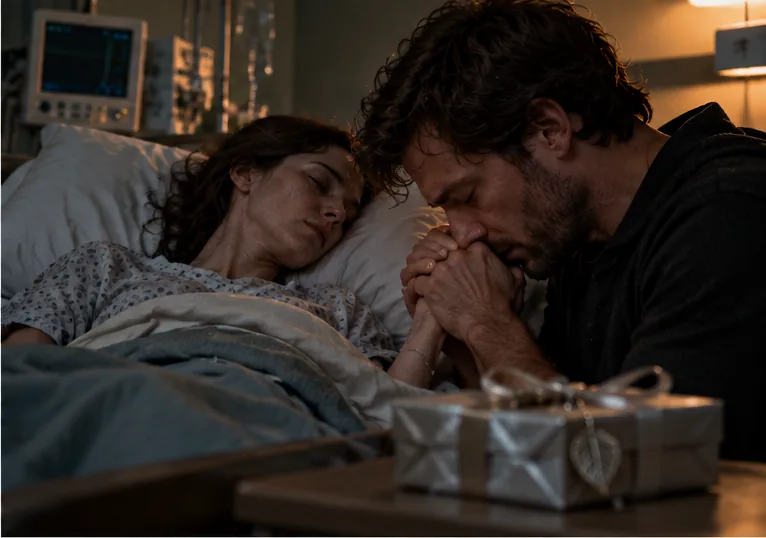
She died on a rainy Tuesday morning in a hospice room that smelled of industrial bleach and synthetic lavender, exactly seventy-two hours before our first wedding anniversary.
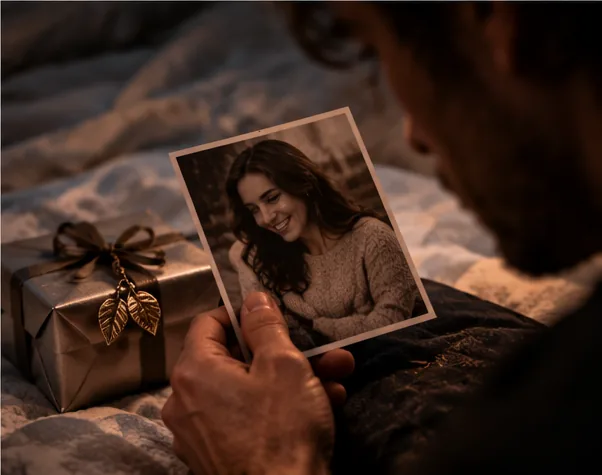
I was twenty-nine. In the drawer of the nightstand beside her hospice bed, I had an unopened gift wrapped in silver paper: a silver bracelet with two intertwined birch leaves that I never got to put on her wrist.
Cancer leaves no fingerprints. There was no one to hunt down in an alley, no one to handcuff, no throat to crush with my bare hands. Just an empty house with sage-green kitchen walls and her gardening gloves still resting on the balcony railing, stiffening in the winter cold.
That’s why I left. I sold the house for whatever the bank could wire to my account in forty-eight hours, filled two duffel bags, and became a traveling homicide consultant.
For twelve years, that’s all I’ve been: a ghost in an old leather jacket, driving a dented sedan from one forgotten zip code to the next. I don’t work for a single police department. I’m hired by underfunded county sheriff’s offices, state task forces, and small-town coroners who find something too monstrous or too politically radioactive for their local boys to handle. I live in extended-stay motels with carpets that smell of stale tobacco and damp lemon. I eat cold roast beef sandwiches in my car at three in the morning. I look at autopsy photographs while other people wake up to make their kids’ coffee.
I took those jobs because in homicide, there’s always someone to blame. When someone is killed, the universe is owed a debt, and I believed my job was to restore the balance.
Then, three months ago, I took a contract in Highfield.
Part 3Highfield
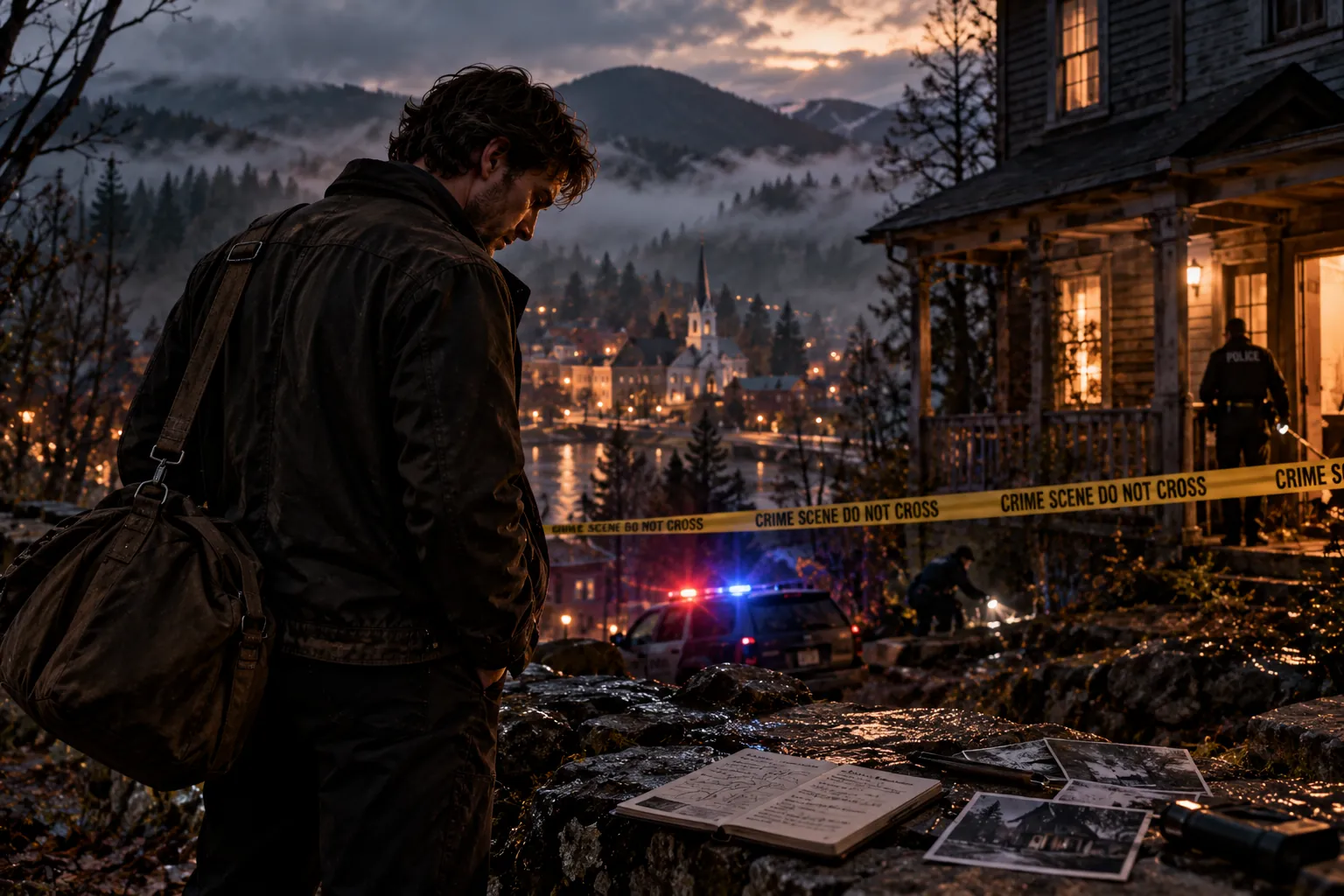
Highfield is an old mountain-valley town nestled in the Appalachians, the kind of place surrounded by towering ridges of white pine and a morning fog so thick it looks like smoke. On paper, it’s picturesque: red brick storefronts, antique gas lamps, clean stone sidewalks, and church steeples glowing in the twilight. But towns like Highfield don’t belong to the people who live in them; they belong to the three or four families who have held the timber rights, the banks, and the municipal charter since the 1880s.
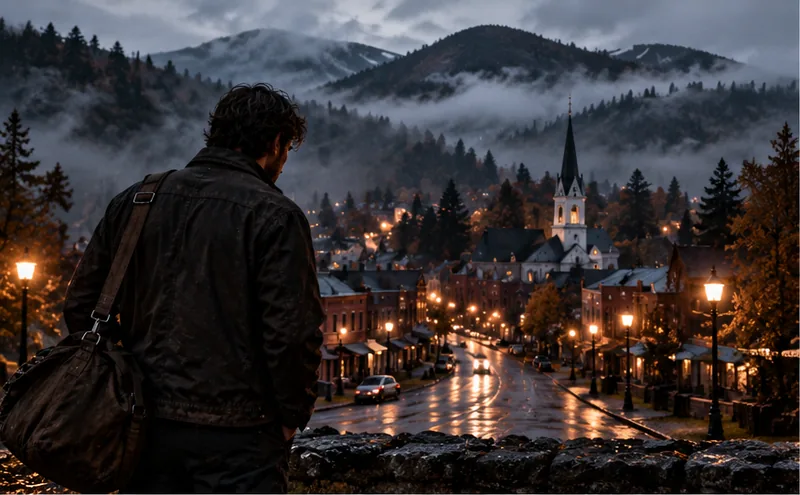
Sheriff Miller, a worn-out, hollow-eyed man who looked like his uniform was wearing him, met me at the door of the County Land and Tax Records annex.
A twenty-six-year-old woman named Tessa Wright had been murdered inside.
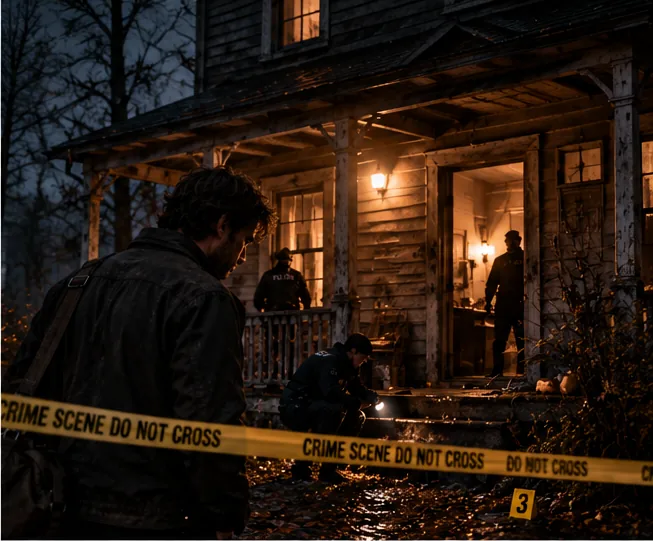
Tessa was the town’s night archivist. She was the kind of girl everyone in a small town remembers fondly: she baked sugar cookies for the library book drives, looked after an old three-legged mutt, and lived alone in a clapboard house her grandmother had left her. Thursday night, she stayed late digitizing land-census deeds from the late 1980s. When the morning cleaning crew opened the basement annex at six o’clock, they found her.
She was still sitting upright in her swivel chair at her desk.
Her wrists and ankles had been fastened to the iron frame of the chair with industrial nylon cable ties, cinched so violently they had cut through the dermis to the periosteum of her wrist bones. Her mouth was covered with three layers of silver metallic tape. But there had been no beating. No signs of sexual assault. No defensive wounds on her hands.
The killer had stood behind her, tilted her head back with a gloved hand, and used an antique, curve-bladed tanner’s knife to make a single, mathematically precise horizontal incision at the base of her neck. He had placed a clean galvanized metal bucket directly between her knees, catching every drop of blood that left her body. The linoleum beneath her chair didn’t have a single one on it.
Her computer screen was still on, its soft blue light illuminating her dead face. It displayed a GIS map of a closed municipal tract called Blackwood Hollow.
I stood over that poor girl for a long time. Her yellow knit cardigan was still buttoned to the collar. A half-eaten green apple sat on a paper napkin beside her mouse pad. The meticulous, terrifying order of the scene made me shudder. It wasn’t passion. It wasn’t panic. It was a harvest.
Part 4Judge Vance
That was the afternoon I met Judge Thomas Vance.
Thomas was sixty-two, tall, with thick silver hair combed back and a voice like church organ pipes: rich, warm, and deeply reassuring. He was the county’s senior magistrate, but in Highfield, titles were only formalities. His great-grandfather had built the lumber mill; the family trust funded high school athletics, the town water plant, and the local free clinic.
When he walked into the basement records office, he looked completely destroyed. His eyes were red, his hands trembling slightly in the pockets of his charcoal wool coat.
“Detective,” he said, taking my hand in both of his. His grip was warm and steady, the gesture of a patriarch trying to hold his community together. “Tessa’s mother was my court clerk for nearly twenty years before she died of heart disease. Tessa was family to this town. If we have to spend every cent of the municipal reserve to see justice done against the animal who did this, we will. My home is your home. Whatever you need, come directly to me.”
In my line of work, you learn to look at everyone with suspicion. But Thomas Vance disarmed me completely. Over the next three weeks, as the local deputies dragged their feet and the town’s insular silence closed around me, Thomas became my sanctuary.
He invited me to his estate on the ridge for dinner several nights a week. He lived alone in a magnificent Georgian manor surrounded by fifty acres of private hemlock forest. Like me, he was a widower; his wife, Clara, had died five years earlier. We sat together in his library by the stone fireplace, drinking small-batch Kentucky bourbon from heavy crystal glasses, and talked about the unbearable, silent emptiness that grief leaves in a house.
“When you watch the person you love die, son,” Thomas told me one evening, staring into the flames, “you realize the world isn’t governed by order. It’s governed by decay. It’s dirty, chaotic, and cruel. Most people live under the illusion that society is a concrete bridge. It isn’t. It’s a layer of black ice over an abyss.”
I remember sitting in that leather chair, the bourbon burning my throat, and feeling a pain so sharp it made me cry. I told him things I hadn’t told anyone since Maeve was buried. I told him about the hospice room. I told him about the silver bracelet in my duffel bag, in its faded wrapping paper. I told him about the horror of watching someone you love turn into something unreal while you stand there, completely helpless.
Thomas leaned forward, laid a heavy, comforting hand on my shoulder, and looked at me with what I took for deep, fatherly mercy.
“You carry too many ghosts, son,” he murmured. “You spend your life trying to save people who are already gone. It’s noble. But it will kill you.”
Dear God, I trusted him. I loved that man like family.
Part 5Blackwood Hollow
Meanwhile, the investigation was heading toward a dark horizon.
Tessa Wright’s digital footprint showed that in the weeks before her murder, she hadn’t been doing routine scanning. She had been secretly pulling chain-of-title records for Blackwood Hollow, a four-square-mile valley the town council had bought in 1991 through a private municipal corporation, and which had been permanently closed under the classification of “hazardous watershed reserve.”
I asked Sheriff Miller to organize an excavation team and cadaver dogs. Miller went pale, mumbled something about private property rights and environmental safety warrants, and then refused. But Thomas Vance was sitting in the sheriff’s office when I brought it up.
Thomas stood, walked to Miller’s desk, and signed an emergency municipal access warrant with his own gold fountain pen.
“If the man who butchered Tessa is hiding something in that hollow,” Thomas said coldly, “we’ll open it up.”
The next morning, we walked through the rusted iron gates of Blackwood Hollow with two shovels, four state forensic experts, and a pair of bloodhounds.
The air in that ravine was dead and cold, reeking of rotting hemlock needles, damp slate, and stagnant water. Half a mile past the tree line, hidden behind a limestone ridge, the dogs began to howl. They weren’t just following a trail; they were throwing themselves desperately against their harnesses, frantically scratching at a long, sunken ditch beneath a roof of black walnut trees.
We brought in the shovels at noon. By dusk, under the harsh glare of portable halogen floodlights, the excavation had uncovered the first batch of remains.
It wasn’t a single burial. It was an organized crypt.
The first body was wrapped in heavy industrial polyethylene sheeting, bound at the wrists, knees, and ankles with aviation-grade cable ties. The neck vertebrae bore unmistakable cut marks, fine as a razor.
By the end of the third day, the state forensic anthropology team had exposed the remains of eight women.
Eight.
The oldest remains were almost entirely skeletal, their rotted clothing reduced to brass jean buttons and sneaker soles, dating to about 1993. The most recent had been buried barely two years earlier: a twenty-one-year-old girl who had vanished from a gas station thirty or so miles to the north.
Each of them had died the same way: bound with aviation cable ties, her throat opened with surgical precision, drained cleanly before burial. And lying directly in the center of each woman’s sternum, the killer had placed a single smooth stone, perfectly polished, of black slate.
I stood in that muddy ditch in the freezing rain, surrounded by eight plastic body bags and the smell of thirty years of decay, and the world seemed to tilt on its axis.
Tessa Wright hadn’t been killed by a random intruder. She had been killed because, while reviewing the town’s old utility easements, she had discovered that Blackwood Hollow wasn’t a hazardous reserve at all. She had found the graveyard. And the man who owned that land knew she had found it.
Part 6The Knife
I didn’t sleep for forty-eight hours. I locked myself in my motel room, pinning photos of the nine victims to the peeling wallpaper, cross-referencing three decades of property deeds, municipal flight logs, and maintenance contracts.
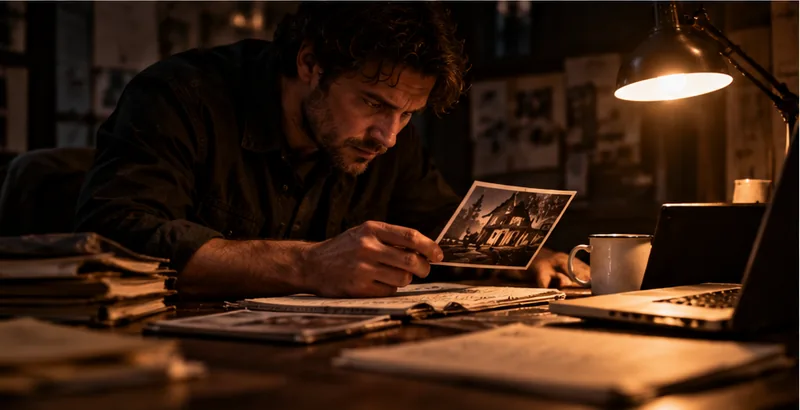
The physical evidence was narrowing with terrifying speed.
The nylon cable ties were a rare model, with a tensile strength of 150 pounds, manufactured exclusively for securing high-pressure aviation fuel lines, and not sold in hardware stores or retail outlets. I pulled the state purchasing logs for the county’s private municipal airfield.
Only one private hangar had bought those specific ties in bulk over the past twenty years: the Vance Agricultural and Timber Trust.
My heart sank.
No, I told myself, staring at the screen in the dead silence of the motel. No. It’s a corporation. It could be a mechanic. A gardener. A contractor.
My hands were shaking so badly I could barely type to open the forensic macro photos of the blade marks on Tessa Wright’s cervical vertebrae. The medical examiner noted that the tool was a vintage curved blade, nineteenth century, with a slight nick on the left bevel.
My memory dragged me violently back to the library of Thomas Vance’s estate.
I remembered sitting by the fireplace with my glass of bourbon. I remembered walking over to his mahogany sideboard to look at his collection of antique leatherworking tools displayed in a velvet-lined case.
There had been an empty rectangular impression in the green velvet.
When I’d asked him about it, Thomas had smiled warmly, refilled my glass, and said: “An old keepsake from my grandfather’s tannery, son. I misplaced it a few weeks ago during spring cleaning. Terrible shame.”
The air left my chest.
Every word he had ever said to me. Every glass of bourbon. Every time he had sunk his eyes into mine and listened to me weep over Maeve’s death, asking me what it was like to watch someone slip away into the dark. He hadn’t been comforting me. He’d been observing me. He had fed on my pain, used my vulnerability to see whether I was sharp enough to expose him, kept me close so he could watch the investigation unfold in real time.
Part 7The Library
I didn’t call Sheriff Miller. In Highfield, Miller was just a man with a badge whose mortgage was held by the Vance trust.
I loaded my service weapon, put my case notes in a manila folder, and drove through the predawn fog to Thomas Vance’s estate.
The heavy iron gates were wide open. The front door of the house wasn’t even locked.
I walked down the quiet, carpeted hallway and found him sitting in his high-backed leather chair beside the last embers of the library fire. He was wearing his gray cashmere sweater, a glass of bourbon in his hand, a leather-bound book open on his lap.
He looked up when I pushed open the door, gun drawn. He didn’t flinch. He didn’t reach for a weapon. He simply looked at me with those calm, sad gray eyes, closed his book, and took off his reading glasses.
“You look terrible, son,” he said softly.
“I know what’s in the hollow, Thomas,” I said. My voice shook with a rage so thick I could barely force the words out of my mouth. “I know about the hangar. I know about the knife. I know about the eight girls.”
Thomas took a slow sip of his bourbon. The firelight danced on his silver hair, casting deep shadows across the lines of his face. He didn’t deny it. He didn’t even flinch.
“Tessa was reckless,” he murmured, his voice as soft and reasonable as a Sunday sermon. “Her mother was a good woman, and I tried to give Tessa every chance to look away. I moved her desk. I reassigned the deeds project twice. But she was stubborn. She had this narrow obsession with digging up things better left hidden.”
“She was only twenty-six,” I spat, the gun trembling in my grip. “She was a child. Those women were children.”
“And what was waiting for them out there, Detective?” Thomas asked, leaning forward, regarding me with a sincere, revolting pity. “A slow, miserable decline? You watched your wife rot from the inside, didn’t you? You watched the cancer turn a beautiful young woman into a screaming, incontinent sack of bones while plastic tubes hissed in her throat. You know what nature does to people. It’s obscene. It’s filthy.”
He set his crystal glass on the table with a soft click.
“What I gave those girls was clean. It was painless, sacred, orderly. One second of fear, then an eternity in the quiet earth, spared from sickness, age, or abandonment. I preserved them. I gave them peace.”
“You butchered them,” I whispered, bile rising in my throat. “You slaughtered them and buried them in the mud like garbage.”
Thomas gave a small, deeply weary smile.
“In this valley, son, I’m the only reason this town hasn’t turned into a wasteland of shuttered shops and opioid overdoses. I built the hospital. I paved the roads. I pay the pensions of the men who keep the electricity running. The world isn’t held together by your childish notions of good and evil. It’s held together by men with the stomach to keep order.”
He slowly reached toward his pocket. I tightened my finger on the trigger, the sight aligned just between his eyes.
Thomas took out his silver fountain pen and set it on the coffee table beside his glass.
“Go ahead,” he said softly. “Call the state authorities. Call the attorney general. Call the governor. See what happens when you try to demolish the foundations of a house while the family is still living in it.”
I didn’t shoot him. God forgive me, I didn’t shoot him because I still believed in the law. I still believed in the red bike.
I forced him to his knees, cuffed him with my own steel bracelets, drove him to my car, and took him straight to state police headquarters two districts away. I logged the physical evidence: the match of the tool marks to the knife, the order receipts for the aviation ties, the chain-of-title records, the eight bodies, and the forty-page document, which I had signed, recording his confession.
I thought it was the end. I thought the truth had won.
Part 8Fatally Flawed
That was six weeks ago.
Two weeks after the arrest, the state attorney general’s office quietly transferred jurisdiction to a special regional oversight panel.
Four days later, the chain-of-custody log for the knife was declared “fatally flawed” after the county clerk’s office claimed the evidence locker had been opened improperly during a shift change. The aviation procurement files in the state database were lost to a “corrupted server migration.”
Then Sheriff Miller and two county commissioners signed sworn affidavits asserting that Blackwood Hollow had been an active toxic-waste containment zone since 1989, and that my unauthorized search had violated the state’s environmental safety protocols, rendering every piece of physical evidence recovered from the ditch legally inadmissible as the fruit of an illegal search.
Last Thursday, a senior circuit judge from the neighboring county, a man whose entire judicial reelection campaign had been funded by the Vance Family Trust, dismissed all charges against Thomas Vance without prejudice, citing a total lack of admissible evidence and gross procedural overreach by an out-of-state contract investigator.
They didn’t just let him walk. They erased everything.
Tessa Wright’s murder was officially reclassified as an open, unsolved homicide attributed to an unidentified transient.
And the eight girls in the hollow? The local paper ran a three-sentence article on page six, describing the excavation as the discovery of “historic skeletal remains consistent with an early twentieth-century logging camp cemetery.” Modern nylon cable ties. Modern zippers. Slate stones laid on their chests. All of it buried under two paragraphs of bureaucratic ink.
The state office terminated my consulting contract the next morning. Sheriff Miller met me at the county line, handed me an envelope containing my per diem check, and stared at the gravel near his boots.
“If you ever turn that car around and come back across this river, Detective,” he said, flat and dead, “I’ll have you arrested for evidence tampering and criminal trespass. Don’t make it hard on yourself.”
Part 9Route 76
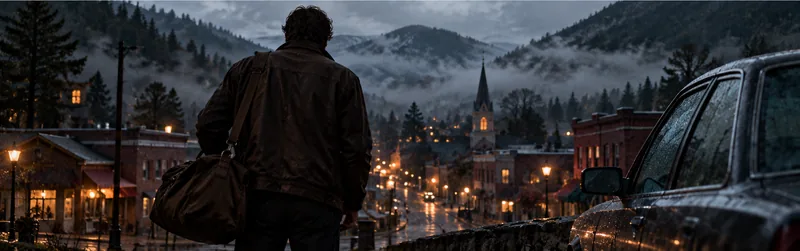
I’m writing this right now in a neon-lit diner on Route 76, just outside Pittsburgh, Pennsylvania. The rain has been coming down for six hours straight, not the clean mountain rain of Highfield, but the thick, industrial rain that smells of diesel and rust. My coffee has gone cold in a ceramic mug that says “Mel’s” in faded red letters. The waitress stopped asking whether I wanted a refill around midnight. It’s 3:47 now, and I’m the only customer left. The heavy trucks rumble outside, their headlights briefly illuminating the words I’m typing on my laptop, then swallowing them back into the dark.
I opened the Highfield local newspaper’s website on my phone an hour ago.
On the front page is a color photo taken yesterday morning. It shows the ribbon-cutting ceremony for the new pediatric wing of Highfield Memorial Hospital. At the center of the scene, holding an oversized pair of golden scissors, stands Judge Thomas Vance.
He’s wearing his charcoal wool coat. His silver hair is neatly combed. He has that warm grandfatherly smile on his face, and behind him, the mayor and the town council are applauding with tears in their eyes.
He’ll sleep in his own bed tonight. He’ll walk the clean stone sidewalks on Sunday morning. He’ll shake the minister’s hand, smile at the young girls working behind the bakery counter, and he’ll know that down there, in the cold, damp slate of Blackwood Hollow, the earth is still soft.
And somewhere in Highfield, Tessa Wright’s old aunt is sitting in an empty house, looking at the framed photo of a girl in a yellow cardigan, being told by the police that nobody knows who killed her niece, and that sometimes bad things just happen in the dark.
When I was seven, I stood in the mud with a rusted bike and believed with all my heart that if you searched hard enough, you could bring the missing things back. I believed that truth was a force of nature, that evil was an aberration the universe would naturally correct if you just showed it where to look.
It isn’t.
Truth is fragile. It’s soft, weak, and easily smothered under five hundred dollars of legal paperwork and a handshake behind closed doors. Justice isn’t a law of the universe; it’s just a word we tell children to keep them from being afraid of the dark.
I have two duffel bags in the trunk of my car, parked outside in the rain. In the side pocket of the smaller one, wrapped in faded silver paper, is a bracelet with two intertwined birch leaves that will never be worn by anyone.
My phone will buzz on this Formica table in a day or two. Another county, another locked room, another dead girl whose family wants an answer. Another town where I’ll pretend truth matters.
I’m going to close this laptop. I’m going to leave money on the table for the waitress who was kind enough not to ask questions. I’m going to walk out into the Pennsylvania rain, my shoes splashing through the puddles in the parking lot, and start my car’s engine. The wipers will beat against the windshield in their useless rhythm, and I’ll drive toward the next town, because searching is the only thing I have left to keep the silence at bay.
But the boy with the birch branch is gone. He died in a library in the mountains, watching a monster drink bourbon by the fire, knowing that the most terrible thing in the world isn’t the evil that lurks in the woods: it’s that when you drag it into the light, everyone in power looks you straight in the eye and pretends not to see.
And I’m going to keep driving in the rain, typing confessions in diners that smell of burnt coffee and broken promises, knowing that no one will ever read this, and that even if they did, it wouldn’t change a thing.