Part 1The Circle
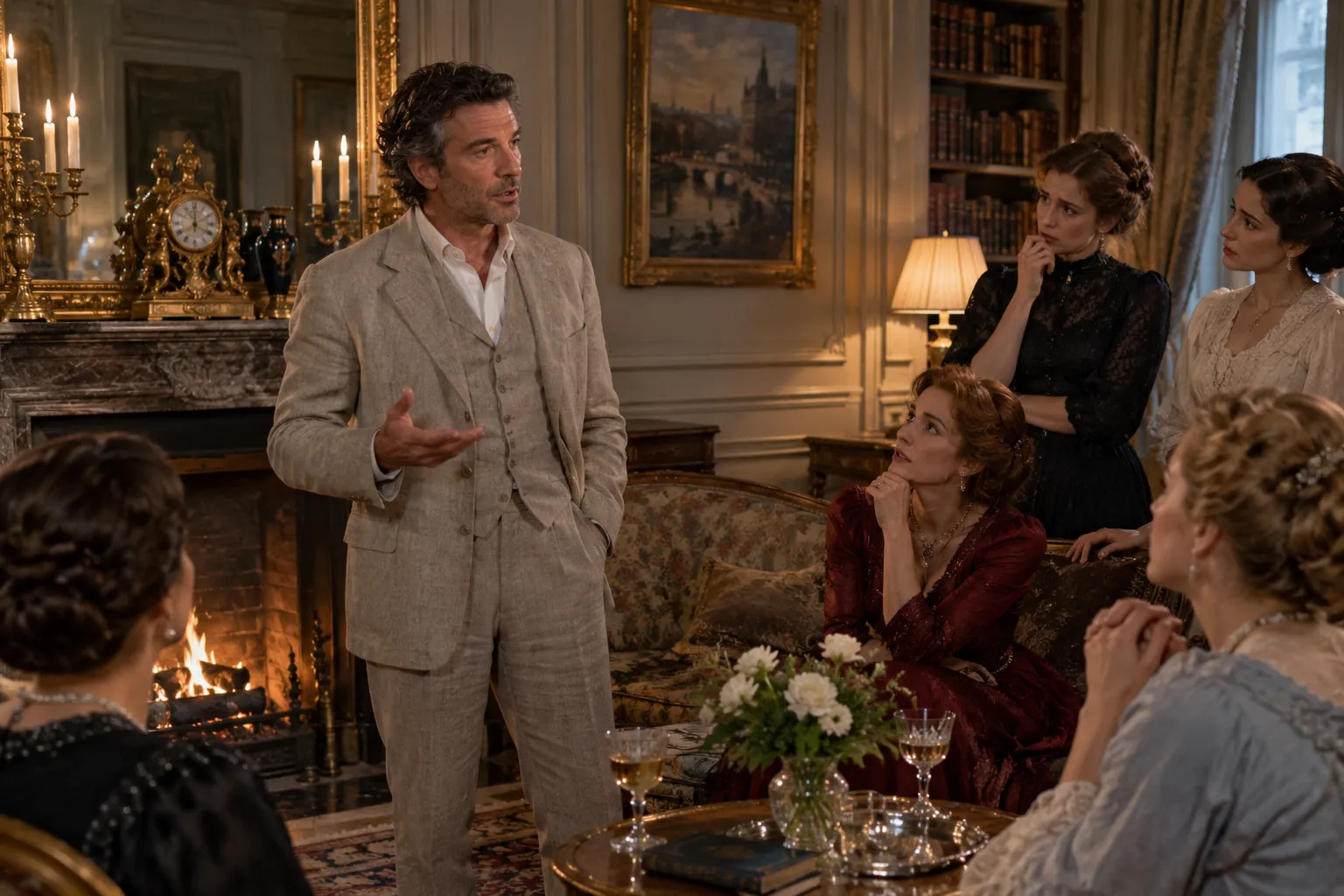
A circle had formed around Monsieur Bermutier, the examining magistrate, who was giving his opinion on the mysterious Saint-Cloud affair. For a month this inexplicable crime had thrown Paris into a frenzy. No one could make any sense of it.
Monsieur Bermutier stood with his back to the fireplace, talking, piecing together the evidence, weighing the various opinions, but reaching no conclusion.
Several women had risen to come closer and remained standing, their eyes fixed on the magistrate’s clean-shaven mouth, from which the grave words came. They shivered and trembled, tensed by their curious fear, by the greedy, insatiable need for dread that haunts their souls and torments them like a hunger.
One of them, paler than the others, said during a silence:
“It’s dreadful. It borders on the ‘supernatural.’ We will never know anything.”
The magistrate turned toward her:
“Yes, madame, it is likely that we will never know anything. As for the word ‘supernatural’ that you have just used, it has no place here. We are dealing with a crime very cleverly conceived and very cleverly carried out, so wrapped in mystery that we cannot separate it from the impenetrable circumstances that surround it.
“But I once had to follow a case in which something truly fantastic seemed to be involved. In the end it had to be abandoned, for lack of any means of clearing it up.”
Several women spoke at once, so quickly that their voices became one:
“Oh! Tell us about it.”
Monsieur Bermutier smiled gravely, as an examining magistrate must smile. He went on:
“Please don’t think, at least, that I could ever, even for a moment, suppose anything superhuman in this adventure. I believe only in normal causes. But if, instead of using the word ‘supernatural’ to express what we do not understand, we simply used the word ‘inexplicable,’ it would be far better.
“In any case, in the affair I am about to tell you, it is above all the surrounding circumstances, the preparatory circumstances, that moved me. Well, here are the facts.”
Part 2The Englishman
I was then an examining magistrate in Ajaccio, a small white town lying beside an admirable gulf ringed on every side by high mountains.
What I had mostly to prosecute there were vendetta cases. Some of them are superb, as dramatic as can be, ferocious, heroic. There we find the finest subjects for revenge one could dream of: age-old hatreds, quieted for a moment but never extinguished; abominable stratagems; murders turning into massacres and almost into glorious deeds.
For two years I had heard of nothing but the price of blood, that terrible Corsican prejudice that compels a man to avenge every insult on the person who made it, on his descendants and his kin. I had seen old men, children, and cousins have their throats cut; my head was full of such stories.
Now, one day I learned that an Englishman had just rented a small villa at the far end of the gulf for several years. He had brought with him a French servant, hired in Marseille on the way.
Soon everyone was talking about this singular character, who lived alone in his house and went out only to hunt and to fish. He spoke to no one, never came into town, and every morning practiced for an hour or two shooting a pistol and a carbine.
Legends grew up around him. Some claimed he was an important figure fleeing his country for political reasons; then others declared he was hiding after committing a dreadful crime. Some even cited particularly horrible circumstances.
In my capacity as examining magistrate, I wanted to gather some information about this man, but it proved impossible to learn anything. He called himself Sir John Rowell.
So I contented myself with watching him closely, though in truth nothing suspicious was reported to me about him.
However, as the rumors about him continued, grew, and became general, I resolved to try to see this foreigner for myself, and I began to hunt regularly in the neighborhood of his property.
I waited a long time for an opportunity. It finally came in the form of a partridge, which I shot and killed right under the Englishman’s nose. My dog retrieved it for me; but, snatching up the game at once, I went to apologize for my impropriety and to beg Sir John Rowell to accept the dead bird.
He was a big man with red hair and a red beard, very tall, very broad, a sort of placid and polite Hercules. He had nothing of the so-called British stiffness, and he thanked me warmly for my courtesy in French with a strong accent from across the Channel. Within a month we had talked together five or six times.
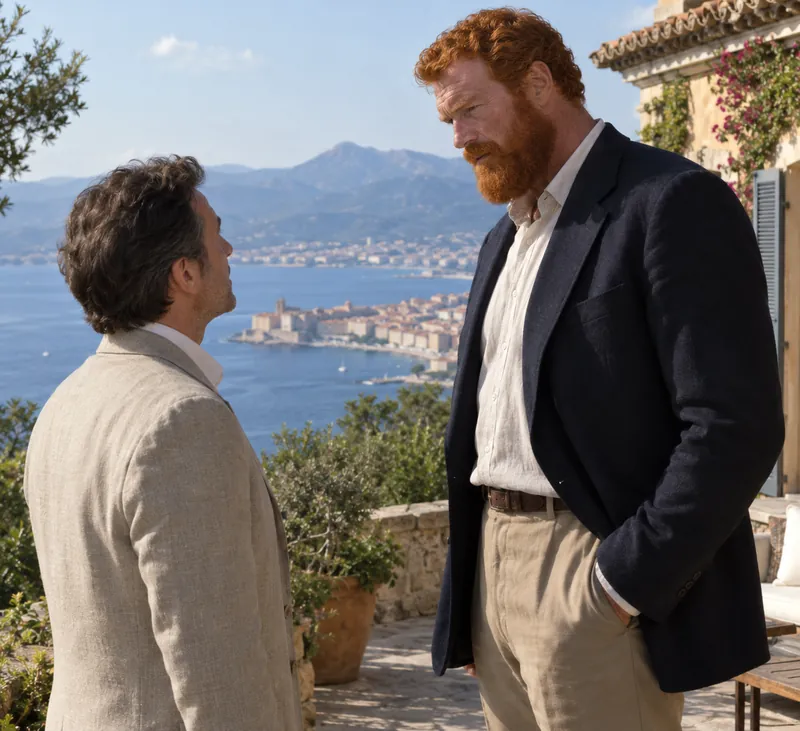
One evening at last, as I was passing his door, I saw him smoking his pipe, astride a chair in his garden. I greeted him, and he invited me in for a glass of beer. I did not need to be asked twice.
Part 3The Black Drawing Room
He received me with all the meticulous courtesy of the English, spoke in praise of France and of Corsica, and declared that he was very fond of this country and this shore.
Then, with great caution and a show of keen interest, I asked him a few questions about his life and his plans. He answered without embarrassment, told me he had traveled a great deal, in Africa, in India, in America. He added, laughing:
“I have had many, many adventures, oh yes.”
Then I turned the talk back to hunting, and he gave me the most curious details about hunting the hippopotamus, the tiger, the elephant, and even the gorilla.
I said:
“All these animals are formidable.”
He smiled:
“Oh no! The worst, it was man.”
He burst out laughing, the hearty laugh of a contented, stout Englishman:
“I have hunted man also, much.”
Then he spoke of weapons, and offered to take me inside to show me guns of various systems.
His drawing room was hung with black, with black silk embroidered in gold. Great yellow flowers ran across the dark fabric, gleaming like fire.
He announced:
“This is a Japanese cloth.”
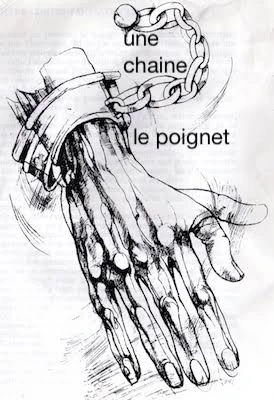
But in the middle of the widest panel, something strange caught my eye. On a square of red velvet, a black object stood out. I stepped closer: it was a hand, a man’s hand. Not a skeleton’s hand, white and clean, but a dried, blackened hand, with yellow nails, bare muscles, and traces of old blood, blood like grime, on the bones, which had been cut off clean, as if by an ax, about the middle of the forearm.
Around the wrist, an enormous iron chain, riveted and welded to that filthy limb, fastened it to the wall by a ring strong enough to hold an elephant on a leash.
I asked:
“What is that?”
The Englishman answered calmly:
“It was my best enemy. He came from America. He was split with the saber, and the skin torn off with a cutting stone, and dried in the sun eight days. Aoh, very good for me, this one.”
I touched this human remnant, which must have belonged to a colossus. The fingers, immensely long, were held together by enormous tendons, with strips of skin still clinging to them here and there. The hand was dreadful to see, flayed like that; it naturally suggested some savage’s revenge.
I said:
“This man must have been very strong.”
The Englishman said gently:
“Aoh yes; but I was stronger than him. I have put this chain to keep him.”
I thought he was joking. I said:
“This chain is quite useless now; the hand won’t run away.”
Sir John Rowell went on gravely:
“It wanted always to go away. This chain was necessary.”
With a quick glance I searched his face, asking myself:
“Is he mad, or a nasty prankster?”
But the face remained impenetrable, calm and kindly. I spoke of other things and admired the guns.
I noticed, however, that three loaded revolvers lay on the furniture, as if this man lived in constant fear of an attack.
I went back to his house several times. Then I stopped going. People had grown used to his presence; he had become a matter of indifference to everyone.
Part 4The Crime
A whole year went by. Then one morning, toward the end of November, my servant woke me with the news that Sir John Rowell had been murdered during the night.
Half an hour later, I entered the Englishman’s house with the chief of police and the captain of the gendarmerie. The valet, distraught and desperate, was weeping at the door. At first I suspected this man, but he was innocent.
The culprit was never found.
On entering Sir John’s drawing room, I saw at first glance the corpse stretched out on its back in the middle of the room.
His waistcoat was torn, one sleeve ripped off hung down; everything showed that a terrible struggle had taken place.
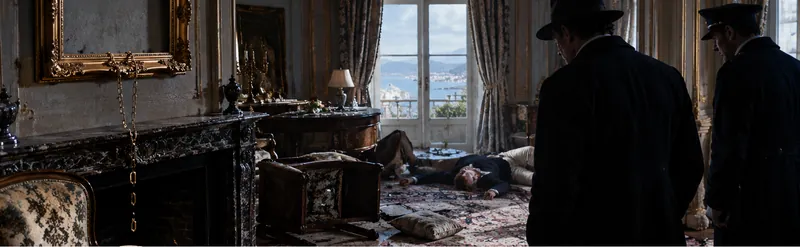
The Englishman had been strangled! His face, black and swollen, frightful, seemed to express an abominable terror; he held something between his clenched teeth; and his neck, pierced with five holes that looked as if made by iron points, was covered in blood.
A doctor joined us. He examined the marks of the fingers in the flesh for a long time and said these strange words:
“It looks as if he was strangled by a skeleton.”
A shiver ran down my back, and I looked at the wall, at the place where I had once seen the horrible flayed hand. It was no longer there. The chain, broken, hung down.
Then I bent over the dead man, and in his clenched mouth I found one of the fingers of that vanished hand, cut, or rather sawed, by the teeth just at the second joint.
Then the examination of the scene began. We discovered nothing. No door had been forced, no window, no piece of furniture. The two guard dogs had not woken.
Here, in a few words, is the servant’s testimony:
“For a month his master had seemed agitated. He had received many letters, burned as they came.
“Often, taking up a riding crop, in a rage that seemed like madness, he had struck that dried hand with fury, the hand sealed to the wall and carried off, no one knows how, at the very hour of the crime.
“He went to bed very late and locked himself in with great care. He always had weapons within reach. Often, at night, he spoke loudly, as if he were quarreling with someone.”
That night, by chance, he had made no noise, and it was only on coming to open the windows that the servant had found Sir John murdered. He suspected no one.
I told the magistrates and the officers of the law what I knew about the dead man, and a thorough inquiry was made throughout the island. Nothing was discovered.
Part 5The Nightmare
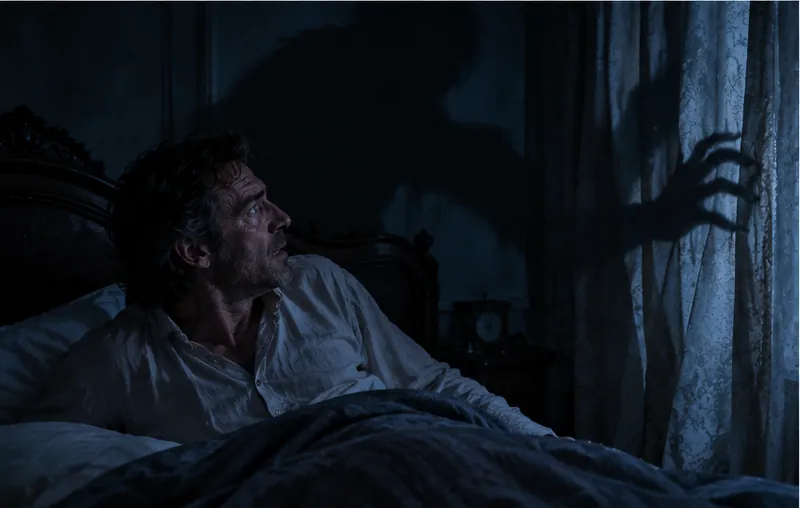
Now, one night, three months after the crime, I had a dreadful nightmare. I seemed to see the hand, the horrible hand, running like a scorpion or a spider along my curtains and my walls. Three times I woke up, three times I fell back asleep, three times I saw the hideous remnant gallop around my room, wiggling its fingers like legs.
The next day it was brought to me, found in the cemetery, on the grave of Sir John Rowell, who had been buried there, since his family could not be found.
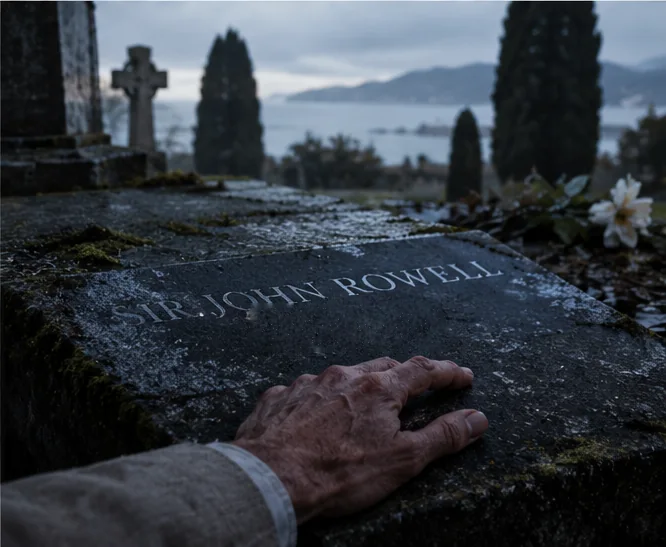
The forefinger was missing.
Part 6My Explanation
“That, ladies, is my story. I know nothing more.”
The women, distraught, were pale and trembling. One of them cried out:
“But that is not an ending, nor an explanation! We won’t be able to sleep unless you tell us what you think happened.”
The magistrate smiled severely:
“Oh! I am going to spoil your terrible dreams, I confess. I think quite simply that the rightful owner of the hand was not dead, and that he came to fetch it with the one he had left. But I could not find out how he did it, for example. It is a sort of vendetta.”
One of the women murmured:
“No, it can’t be like that.”
And the examining magistrate, still smiling, concluded:
“I told you my explanation would not suit you.”
December 23, 1883